Now Reading: A Journey Across the Niger Delta: Fellowship, Farewell, and the Meaning of “Wado”
-
01
A Journey Across the Niger Delta: Fellowship, Farewell, and the Meaning of “Wado”
A Journey Across the Niger Delta: Fellowship, Farewell, and the Meaning of “Wado”


How It All Started
This journey started with the close-out meeting for the Fellows of the Intersectional Leadership Incubator (ILI), a group selected from across the ten states of the Niger Delta.
Over the course of the programme, I had the privilege of travelling with the team to six of these states, and honestly, it was one of those experiences that stays with you. The kind you think about later and just say,
“Chai… God really tried for this one.”
It wasn’t just about movement from one place to another; it was about seeing leadership come alive in communities, in conversations, and in very practical acts of service.
Awka: Where We First Came Together
The fellowship training held in Awka, Anambra State. That was where everyone first came together – different accents, different realities, one shared purpose.
From that first meeting, it was clear this wasn’t going to be one of those trainings where people just collect certificates and waka go house.
This one was different. Serious, but not stiff. Purposeful, but still human. It was designed to be grounded, practical, and community-focused.
From Ideas to Action
After the training, the fellows returned to their communities with a clear task: go back home and do something meaningful, small, yes, but impactful. Each project came with seed funding, but what really powered them was commitment.
Travelling with the team to witness these projects was deeply fulfilling for me. What stood out wasn’t the size of the projects, but how much they meant to the people.
The gratitude was loud even when spoken quietly. The kind that makes you pause and say, “Ah. This thing wey we dey do get sense.”
And then there was the environment, the Niger Delta in all its richness. Lush. Green. Alive.
On the Road (and Water) Across the Delta
From Oron in Akwa Ibom State, where we entered a boat to Bakassi in Cross River State, to the palm-filled views of Imo and Abia States, and into the creeks of Nembe in Bayelsa State, everywhere felt different, yet familiar.
Our visit to Ogoniland left a particularly strong impression on me. The beauty and lush vegetation there are things you really have to experience firsthand.
At the same time, it made me wonder how much more vibrant the land might have been without years of environmental damage. That contrast stayed with me.
Coming to the End
As with everything that has a beginning, this journey eventually reached its end.
In November, after the successful implementation of the fellowship projects, we gathered for the close-out meeting and travelled to Ughelli, Delta State. It was exciting, emotional, and reflective all at once, one of those moments where you realise a chapter is closing.
While in Delta State, we also paid a visit to Dr. Otive Igbuzor, who was performing the final burial rites for his elder sister. It was at this burial ceremony and the events around it, that the next chapter of the story unfolded.
A Journey Within the Journey: Heading to Emonu-Orogun
The destination was Emonu-Orogun, but we didn’t go straight there. On the way, we stopped to admire the heaps of white sand in Agbarha-Otor. One of those moments where everybody just paused like, “Ah ah… see fine thing.”
Somewhere along the line, I also learned that Olorogun Michael Ibru is from Agbarha-Otor, not Orogun as I had always thought. All these years, I had allowed name confuse me. See assumption.
Entering Orogun Kingdom
We eventually arrived in Orogun Kingdom, passing familiar landmarks—the first Anglican Church in Orogun, the Defence Space School, and the Federal Polytechnic, Orogun.
When we finally got to Emonu-Orogun, Dr. Otive Igbuzor Crescent, we realised the church service had already started – somewhere else. No stress. No drama. We just turned back and joined the service at the Anglican Church in Ugono-Orogun. As Yoruba people would say, “A ti dé” We’ve arrived.
The Little Moments That Matter
Somewhere between the solemnity and the gathering were the moments that made everything feel human, the shared smiles, quiet jokes, and of course, the familiar “my guy” and “chairlady” exchanges. Those moments reminded me that community is built just as much through laughter as through tradition.
That’s community. No forming. No long grammar.
Learning the Meaning of “Wado”
After the service, on our way to the Emonu-Orogun school field for the reception, we made a few meaningful stops – at the family house often mentioned when Dr. Igbuzor talks about his humble beginnings, the Ejiro and Otive Foundation, and the Palace of Priest, Orogun.
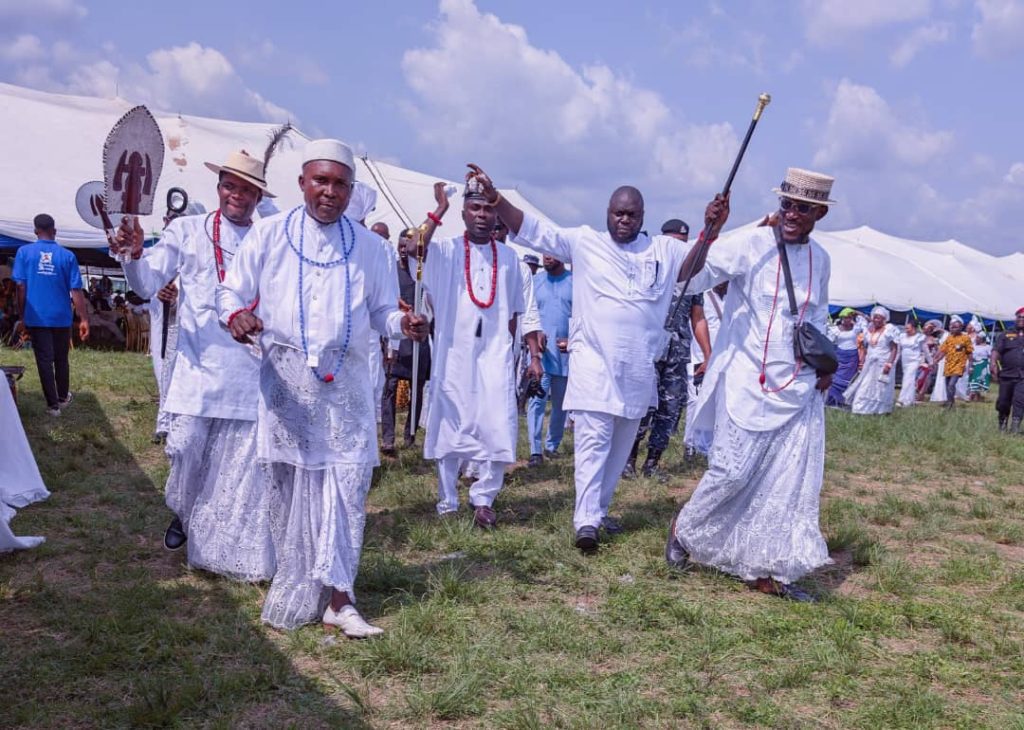
At the reception, tradition took centre stage. The hosts and family went round three times to greet guests, each time saying “Wado.”
Watching this, it became clear that Wado is not just a greeting. It’s respect. Gratitude. Recognition. The kind that says, “We see you. We appreciate you.”
No shortcuts. Tradition no dey rush.
Food, Faces, and a Quiet Goodbye
As the event continued, food was flowing properly. I had to ask myself small questions about my priorities, but that’s a story for another day.
Just as we were about to leave, we caught a glimpse of Dr. Omo-Agege arriving at the gathering. One of those moments that remind you how public life and community often intersect in meaningful ways.
A Final Image That Lingers
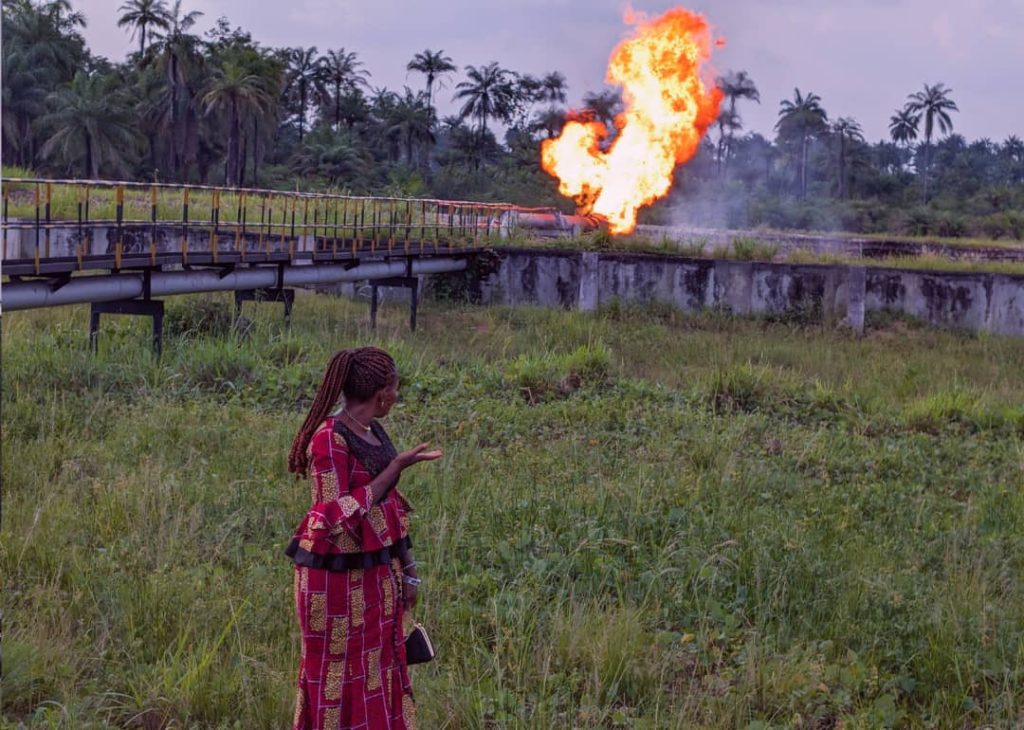
As we left Emonu-Orogun, I saw a gas-flaring plant for the first time in my life. Seeing it against all that greenery was sobering. Beautiful land. Heavy reality.
God bless the Niger Delta.
God bless Nigeria.